





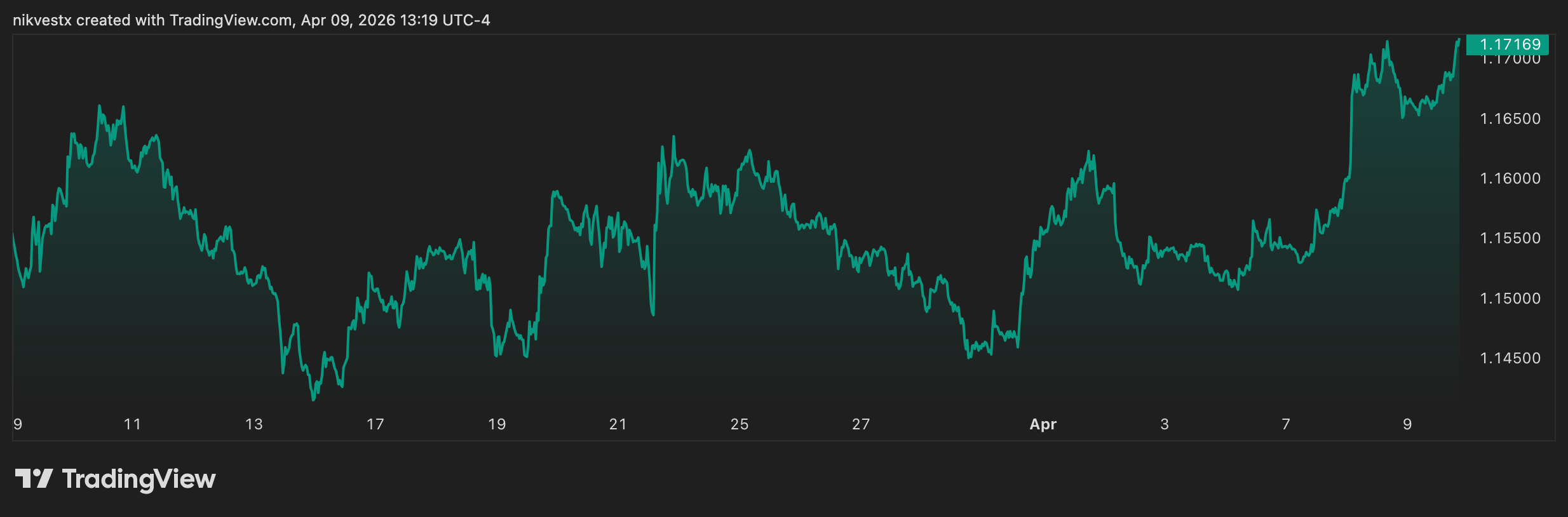
Europe is choking on triple-digit crude oil. The US Dollar is the only game in town as stagflation fears effectively paralyze the Eurozone. Signal: SHORT (Sell the Relief Grind) Signal Expiration Date: April 30, 2026
6 Major Levels:
-
1.1650 (Resistance – Flipped Ceiling)
-
1.1598 (Resistance – Algorithmic Supply)
-
1.1520 (Current Active Price)
-
1.1475 (Support – The “King” Level / Capitulation Wick)
-
1.1400 (Support – Options Barrier)
-
1.1350 (Target – Institutional Abyss Level)
Description, Probabilities & Price Prediction: The European Central Bank (ECB) is currently trapped in the worst macroeconomic nightmare possible: a classic stagflationary shock. Because Europe relies heavily on external energy imports, the sudden spike in crude oil acts as a massive, unavoidable tax on their industrial core—specifically Germany. Inflation is spiking again, but the underlying economy is contracting. The ECB cannot hike interest rates to defend the Euro without triggering a deep industrial recession, yet holding rates steady allows the Federal Reserve to completely dominate the yield spread.
Every minor green candle you see on the EUR/USD 4-hour chart is not a fundamental recovery; it is mechanical short-covering by algorithms locking in profits before reloading their shorts at premium prices. The asset is printing a textbook sequence of lower highs. The massive capitulation wick down to 1.1475 cleared out all the early retail buyers, leaving an absolute void of liquidity below the current active price. Smart money is systematically distributing their Euro exposure to retail traders who erroneously believe the asset is “cheap.”
Probabilities: There is an 80% probability of a continued structural breakdown as the yield differential widens in favor of the US Dollar. There is a 20% chance of a choppy, low-volume stabilization if Middle East tensions suddenly de-escalate, bringing oil prices down. April Prediction: Gravity takes hold completely. The pair will systematically slice through the 1.1475 macro wick to hunt the resting liquidity pools below it, eventually settling near the 1.1400 institutional options barrier by late April.