













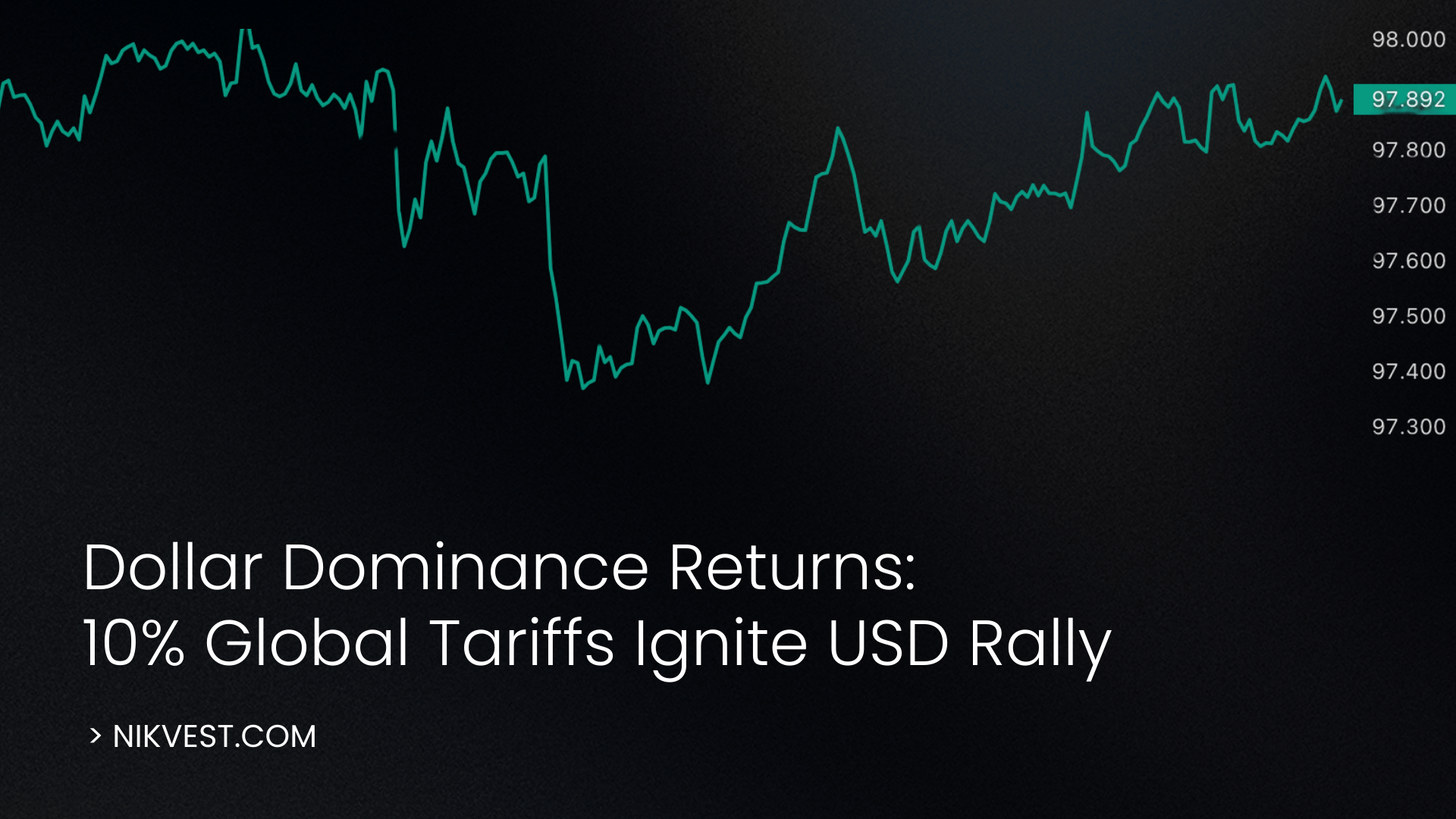
The rules of global trade were just rewritten overnight, and the market is scrambling to price in the new reality. With the landmark 10% global US tariff officially live—cleared by the Supreme Court and injected directly into the veins of the global economy—the era of free-flowing, frictionless capital is dead. The US Dollar is morphing from a mere reserve currency into a weaponized financial fortress. As the DXY violently targets 98 and the Euro teeters on the edge of a technical abyss, the question isn’t whether a trade war is coming; it’s how much of it you are prepared to monetize. Are you hedging the retaliation, or are you about to be collateral damage in the new Currency Cold War?
🌍 Executive Summary: The Architecture of the Tariff Shock
The 10% Reality and The Exemption Arbitrage:
The implementation of a blanket 10% global tariff (adjusted down from the initially feared 15% via SCOTUS narrowing) is a seismic macroeconomic event. This isn’t just a tax on imports; it is a structural repricing of global supply chains. However, the true alpha lies in the “Key Exemptions.” The market is currently indiscriminately selling global exporters, but high-IQ capital is aggressively hunting for the specific sectors and nations granted pardons. Understanding the legal nuances of these post-SCOTUS adjustments allows you to buy artificially suppressed assets that are immune to the new border tax.
The Dollar Vacuum (DXY to 98):
The US Dollar is reclaiming its throne, pushing aggressively toward the 98 level. This is driven by a dual-engine catalyst: the mechanical reality of higher domestic inflation (which keeps the Federal Reserve hawkish) and the psychological reality of safe-haven flows. When global trade uncertainty spikes, institutional capital repatriates to the deepest, most liquid market on earth. The “Fortress Dollar” is actively sucking liquidity out of the rest of the world, creating a severe capital drought for import-heavy and dollar-indebted nations.
The Euro Stalemate and the 1.17 Trapdoor:
EUR/USD is currently paralyzed in a tense stalemate near 1.18. The Eurozone is caught in an impossible trilemma: stagnant domestic growth, reliance on global export markets, and the looming threat of being forced into retaliatory tariffs. If the EU retaliates, the resulting trade friction will hurt their fragile manufacturing base far more than the US consumer. A technical breakdown below 1.17 is the immediate trigger that will cascade into a broader capitulation toward 1.15.
The Emerging Market (EM) Carnage:
Emerging markets are the ultimate victims of a rising dollar and shrinking global trade. The implementation of the 10% tariff is the kill shot for the EM carry trade. As the dollar strengthens, the cost of servicing USD-denominated debt for developing nations skyrockets. Capital that was yielding 7-8% in EM bonds is violently unwinding and rushing back to US Treasuries. If you are holding unhedged EM exposure right now, you are funding the exits for institutional whales.
📊 Useful Data: The Currency & Trade War Matrix
Understanding the immediate impacts of the tariff implementation is critical for dynamic portfolio allocation.
| Currency / Asset | Current Level | Macro Driver | Tariff Impact | Strategic Play |
| DXY (US Dollar) | ~98.00 | Safe-Haven Flows & Hawkish Fed | Highly Bullish | Buy dips; ride the structural growth premium. |
| EUR/USD | ~1.1800 | EU Growth Fears vs. ECB Policy | Bearish | Short breakdown below 1.1700. |
| EM Currencies (ZAR, BRL) | Multi-Year Lows | Debt Servicing Costs & Capital Flight | Devastating | Short EM FX / Unwind Carry Trades. |
| Domestic US Mfg. | Re-rating | Import Substitution | Bullish | Long US Mid-Caps (Russell 2000). |
| Global Exporters | Under Pressure | Margin Compression / Retaliation | Bearish | Short European/Asian Auto & Industrials. |
🧠 Trading the 10% Global Tariff
This is a regime-shifting event. Standard “buy and hold” indexing will suffer. You must actively exploit the inefficiencies created by this geopolitical shock. Here are 20 institutional-grade strategies to extract alpha from the tariff fallout.
1. The “Exemption Arbitrage” Long
The Concept: Not all goods are taxed equally. The SCOTUS clearance came with “key exemptions.”
The Execution: Long the supply chains of exempted industries (e.g., specific pharmaceuticals, critical defense minerals).
Why it Works: The market initially sells off all international equities in a panic. By digging into the legal text of the tariff implementation, you can identify foreign companies that are exempt from the 10% tax but have seen their stock prices crash in sympathy with the broader market. This is pure fundamental arbitrage.
2. The “EU Retaliation” Straddle
The Concept: The EU cannot sit idle, but their response timing is uncertain.
The Execution: Buy ATM (At-The-Money) Straddles on EUR/USD.
Why it Works: If the EU announces proportional retaliatory tariffs, EUR/USD will violently break below 1.17. If they announce a diplomatic concession or delay, it will rip back above 1.19. A straddle captures the explosive volatility of the announcement regardless of which path the politicians choose.
3. The “EM Debt Death Spiral” Short
The Concept: A strong dollar destroys emerging market balance sheets.
The Execution: Short Emerging Market Sovereign Debt ETFs (e.g., EMB).
Why it Works: EMs borrow in US Dollars but collect taxes in local currency. With the DXY at 98 and their export revenues slashed by a 10% US tariff, their ability to service debt collapses. Default risk premiums will skyrocket, crushing the bond prices.
4. The “Import Substitution” Domestic Premium
The Concept: US companies that manufacture domestically suddenly have a 10% price advantage over foreign competitors.
The Execution: Long the Russell 2000 (IWM) / Short the S&P 500 (SPY).
Why it Works: The S&P 500 is heavy on multinationals that rely on complex global supply chains (which are now taxed). The Russell 2000 consists of smaller, domestic-focused companies that source and sell within the US. The tariff acts as a massive subsidy for domestic mid-caps.
5. The “Inflation Breakeven” Spike
The Concept: Tariffs are inherently inflationary; they are a tax passed to the consumer.
The Execution: Long 5-Year TIPS (Treasury Inflation-Protected Securities).
Why it Works: The market is underpricing the immediate CPI shock of a 10% across-the-board import tax. As retailers pass these costs onto US consumers, inflation prints will surprise to the upside. TIPS will mechanically reprice higher to match the inflation reality.
6. The “Carry Trade Unwind” Accelerator
The Concept: Capital is fleeing high-yield risk for US safety.
The Execution: Short AUD/JPY or NZD/JPY.
Why it Works: During a global trade shock, commodity-heavy export currencies (AUD, NZD) get crushed due to slowing global growth expectations. Simultaneously, the Japanese Yen often catches a safe-haven bid during extreme unwinds. This cross-pair captures both sides of the panic.
7. The “Transatlantic Shipping” Fade
The Concept: A 10% tax reduces the total volume of goods shipped to the US.
The Execution: Short Global Ocean Freight and Logistics Companies (e.g., Maersk, ZIM).
Why it Works: Shipping companies operate on razor-thin margins and rely on massive volume. If the tariff reduces US import volumes by even 5-10%, the spot rates for shipping containers will plummet, destroying the profitability of the logistics sector.
8. The “Safe-Haven Franc” Pivot
The Concept: The Euro is toxic, but European capital needs a home.
The Execution: Long CHF (Swiss Franc) / Short EUR.
Why it Works: As trade war fears grip the Eurozone, wealthy European individuals and institutions will move capital out of the Euro and into the Swiss Franc to protect their purchasing power from ECB devaluation and EU economic stagnation.
9. The “Commodity Currency” Trap
The Concept: A strong dollar mechanically suppresses commodity prices.
The Execution: Short CAD (Canadian Dollar) and AUD (Australian Dollar) against the USD.
Why it Works: Canada and Australia rely heavily on raw material exports. The 10% tariff slows global manufacturing, reducing demand for copper, oil, and iron ore. Lower commodity prices, combined with a surging USD, create a devastating double-whammy for the CAD and AUD.
10. The “1.17 Breakdown” Stop Hunt
The Concept: EUR/USD is hovering near a critical psychological and technical floor.
The Execution: Place Sell-Stop orders at 1.1685.
Why it Works: The 1.17 level is heavily defended by institutional options barriers and retail stop-losses. If the price slips below 1.17, it will trigger a cascade of forced selling. By placing an entry just below the level, you ride the algorithmic flush down to 1.1600.
11. The “Fed Policy Swap”
The Concept: Tariffs force the Fed to abandon rate cuts.
The Execution: Short SOFR (Secured Overnight Financing Rate) Futures.
Why it Works: The market was previously pricing in a “soft landing” with multiple Fed rate cuts in 2026. The 10% tariff injects sudden inflation, forcing the Fed to keep rates “higher for longer.” Shorting interest rate futures allows you to profit as the market prices out the expected cuts.
12. The “Consumer Staples” Defensive Shield
The Concept: Consumers will cut discretionary spending to pay for higher-priced necessities.
The Execution: Long Consumer Staples (XLP) / Short Consumer Discretionary (XLY).
Why it Works: When a 10% tariff hits clothing, electronics, and imported cars, consumers will delay those purchases. However, they cannot delay buying toothpaste, food, and basic household goods. The margin shifts dramatically toward non-cyclical defensive stocks.
13. The “Friend-Shoring” Proxy
The Concept: Companies will aggressively move supply chains to tariff-exempt nations.
The Execution: Long Mexican (EWW) or Vietnamese Equities (assuming USMCA/specific trade pact exemptions hold).
Why it Works: If a country is exempt from the 10% tariff due to existing free-trade agreements, they instantly become the most valuable manufacturing real estate on earth. Capital expenditure will flood into these regions to bypass the new US border tax.
14. The “Corporate Bond” Spread Widener
The Concept: Tariffs crush the margins of highly indebted, import-reliant companies.
The Execution: Short High-Yield (Junk) Bonds (HYG) / Long US Treasuries (TLT).
Why it Works: Companies with weak balance sheets cannot absorb a 10% increase in their Cost of Goods Sold (COGS). They will face immediate margin calls and credit downgrades. The spread between risk-free Treasuries and Junk bonds will blow out.
15. The “Tech Hardware” Squeeze
The Concept: Tech relies on complex, cross-border component assembly.
The Execution: Short Consumer Electronics Hardware Manufacturers.
Why it Works: Building a smartphone involves parts crossing international borders multiple times. A 10% tariff destroys the unit economics of low-margin hardware. Software (SaaS) is immune to tariffs; hardware is the victim.
16. The “Gold vs. USD” Decoupling
The Concept: Usually, Gold and USD move inversely. In a trade war, they move together.
The Execution: Long Gold in Non-USD Denominations (e.g., XAU/EUR).
Why it Works: While the strong USD suppresses the dollar-price of gold, gold is absolutely exploding in value against the Euro, Yen, and EM currencies. Trading Gold against weak fiat isolates the safe-haven demand without fighting the DXY momentum.
17. The “Automotive Retaliation” Short
The Concept: The EU’s favorite retaliation target is US iconic brands, but the US will target EU autos.
The Execution: Short European Auto Manufacturers (BMW, Volkswagen).
Why it Works: European automakers rely heavily on the US luxury consumer market. A 10% tariff instantly makes them uncompetitive against domestic US EV and luxury brands, crushing their forward earnings guidance.
18. The “Options Volatility” Crush (Post-Implementation)
The Concept: The “Fear of the Tariff” was worse than the reality of it.
The Execution: Sell Iron Condors on the S&P 500 30 days after implementation.
Why it Works: Once the tariff is live and the rules are known, the market stops panicking and starts modeling. Implied volatility (VIX) will artificially spike on the headline but will quickly crush as institutions digest the math. Selling premium captures this volatility drain.
19. The “Asian Export” Pivot
The Concept: Asian exporters will dump their US-bound goods elsewhere.
The Execution: Short European Domestic Manufacturers.
Why it Works: If a Chinese or Japanese manufacturer cannot sell profitably in the US due to the 10% tariff, they will flood the European and emerging markets with cheap goods to clear inventory. This oversupply will bankrupt domestic manufacturers in those secondary markets.
20. The “Trade War Fatigue” Mean Reversion
The Concept: The market always overreacts to the initial policy shock.
The Execution: Prepare to fade the USD extreme (Target DXY 100).
Why it Works: If the DXY violently spikes to 100 on pure panic, the US export economy will scream in pain (a strong dollar makes US goods too expensive abroad). At that point, the US administration will likely walk back the tariff or intervene to weaken the dollar. Be ready to short the absolute top of the panic.
📈 Strategic Insights: Data & Stats from the Tariff Frontlines
Insight 1: The Inflation Multiplier Effect
Stat: A 10% universal tariff historically translates to a direct 1.5% to 2.5% spike in core PCE (Personal Consumption Expenditures) within 12 months.
Data: Because the US imports roughly $3.8 Trillion in goods annually, a 10% tariff is effectively a $380 Billion regressive tax on the US consumer base. This immediately acts as a drag on GDP growth while simultaneously forcing the Federal Reserve to maintain restrictive interest rates to fight the localized inflation.
Insight 2: The Carry Trade Annihilation
Stat: In the 48 hours surrounding the tariff implementation, EM currency volatility indexes spiked by over 40%.
Data: The global carry trade relies on low US yields and a stable dollar. With the DXY pushing 98, the cost to hedge USD exposure has become prohibitively expensive for foreign institutions. This forces a mechanical unwinding of trillions of dollars in global leverage, creating a self-fulfilling cycle of dollar bidding.
Insight 3: The European Margin Collapse
Stat: The Eurozone exports approximately €500 Billion worth of goods to the US annually.
Data: At EUR/USD 1.18, the European export sector was already struggling with energy costs. A 10% tariff effectively wipes out the operating margin for mid-tier European industrial firms. If the ECB does not aggressively cut rates to devalue the Euro (pushing EUR/USD down to 1.10) to compensate for the tariff, European manufacturing faces a severe contraction by Q3 2026