











The ocean is deep, and the big fish eat the small fish. In the crypto markets, you are not the predator; you are the plankton. While you stare at a 5-minute candle praying for a bounce, a single wallet in a Singaporean high-rise is preparing to dump $500 million of sell pressure that will liquidate your leverage before you can blink. Tweet: You are swimming with sharks. Learn to spot their fins before they bite. The game is rigged, but if you can track the riggers, you can profit from the manipulation.
Executive Summary: The Architecture of Control
The Pareto Principle of Crypto:
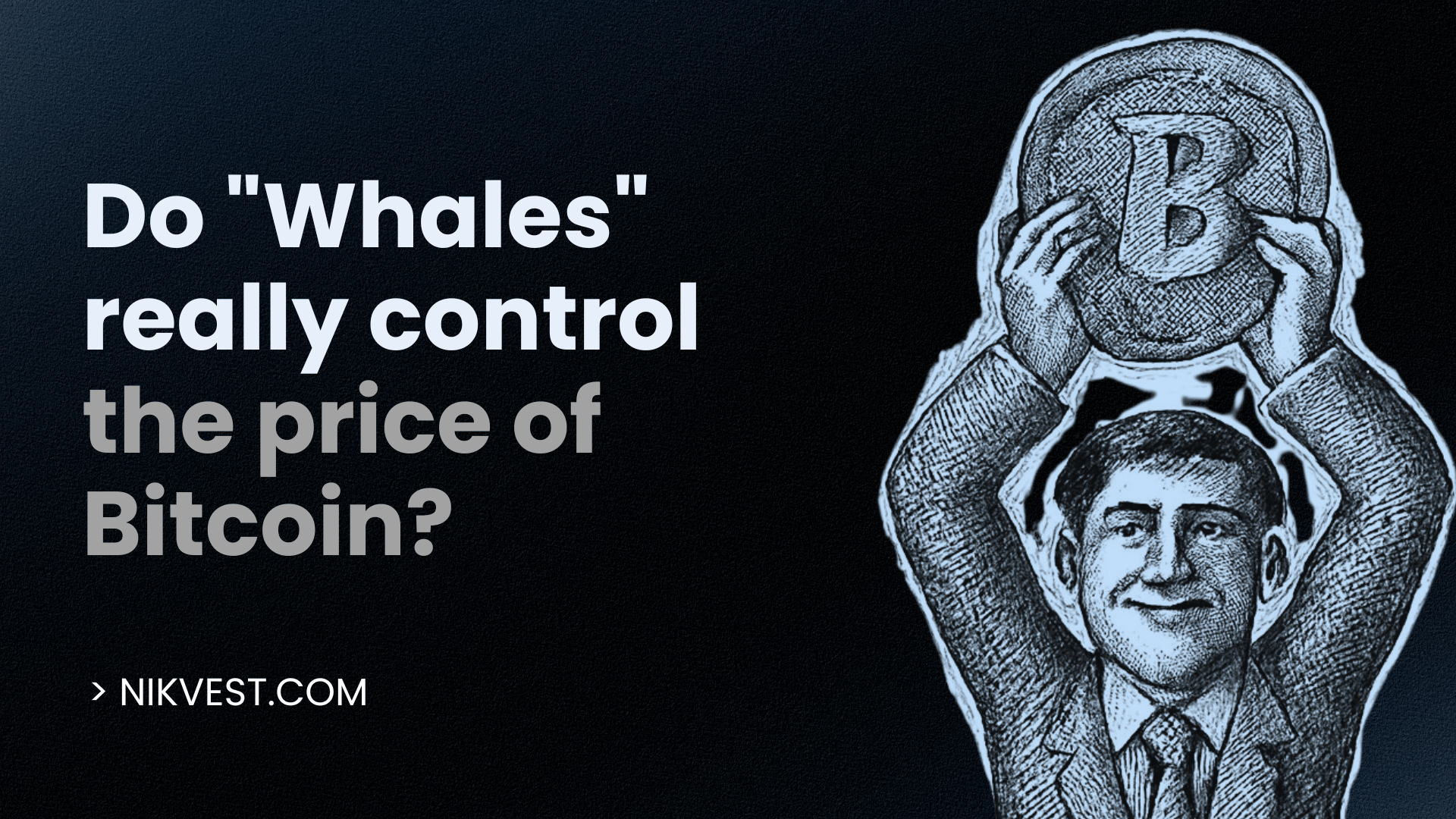
The decentralization narrative is a beautiful myth, but the on-chain reality is a stark oligarchy. Approximately 2% of network entities control over 80% of the Bitcoin supply. These “Whales” (holding >1,000 BTC) do not trade on the same playing field as you. They are the playing field. When they move, the tides shift. This is not a conspiracy; it is a mechanism of market structure. A whale cannot sell $100 million of Bitcoin on a whim; the order book depth (liquidity) is rarely sufficient to absorb it without crashing the price. Therefore, they must manipulate. They must create “Exit Liquidity.” They need your FOMO buy orders to sell into, and your panic sell orders to buy into.
The Necessity of Manipulation:
Why does price often pump immediately after you get stopped out? This is the “Stop Hunt.” Whales need liquidity to fill their massive positions. The clusters of stop-loss orders sitting below key support levels represent a pool of instant liquidity. By pushing the price down to trigger these stops, whales force retail traders to sell, allowing the whale to buy massive quantities at a discount without slippage. The “wick” you see on the chart isn’t an error; it is a liquidity grab. Understanding that Liquidity > Fundamentals is the first step to high-IQ trading.
The Power of Three (AMD):
Institutional algorithms operate on a cycle known as Accumulation, Manipulation, and Distribution (AMD). This happens on daily, weekly, and even intraday timeframes.
Accumulation: Price moves sideways in a tight range to build a position without alerting the market.
Manipulation: A fake move in the opposite direction of the true intent (e.g., a sharp drop to induce bearish sentiment and trap shorts).
Distribution: The real move takes place, ripping price higher and leaving the trapped shorts as fuel for the rally.
If you don’t know which phase you are in, you are the yield.
On-Chain Transparency:
The greatest weakness of the Whale is the blockchain itself. Unlike the dark pools of Wall Street, every Bitcoin transaction is recorded on a public ledger. Tools like Glassnode, Arkham Intelligence, and Whale Alert allow us to “dox” the smart money. By monitoring Exchange Inflows (whales moving coins to sell) and Stablecoin Minting (whales printing cash to buy), we can build a radar system that detects nuclear launches before the missiles hit.
️ The Mechanics: How the “Smart Money” Hunts
Whales are not gambling; they are executing business operations. Their primary constraint is Slippage—the difference between the expected price of a trade and the price at which the trade is executed. To avoid slippage, they use advanced algorithms and psychology.
The “Iceberg” Order
A whale never reveals their full hand. If they want to buy 10,000 BTC, they place an “Iceberg Order”—a large order divided into thousands of tiny chunks. To the retail eye, it looks like normal buying pressure.
The Counter-Tactic: Watch the CVD (Cumulative Volume Delta). If price is flat but CVD is rising aggressively, someone is “absorbing” all the selling pressure with limit orders. This is a hidden whale.
The “Paint the Tape” Spoofing
Whales place massive “Sell Walls” in the order book just above the current price to scare retail traders into selling. As the price approaches the wall, the whale pulls the order. This is illegal in regulated equities but rampant in crypto.
The Reality: If you see a massive order sitting in the book, it is likely fake. Real orders are executed immediately (Market Orders) or hidden (Iceberg). Static liquidity is usually a lie; dynamic liquidity is the truth.
Useful Data: The Whale Classification Matrix
Not all whales are the same. You must identify who is moving the money.
| Whale Type | Wallet Signature | Typical Behavior | Price Impact | Signal |
| The Exchange Whale | Transfers to/from Coinbase/Binance | High Velocity. Moves coins to trade actively. | Immediate. Often precedes volatility within hours. | Bearish (if Inflow) / Bullish (if Outflow). |
| The Miner | Coinbase rewards -> OTC Desks | Capitulation. Sells to cover electricity costs during bear markets. | Suppressive. Constant sell pressure until inventory clears. | Bearish (if Hash Ribbon inverts). |
| The ETF/Institutional | Custodial Wallets (Coinbase Prime) | TWAP Buying. Systematic buying during US market hours. | Sustained Trend. Drives the long-term cycle. | Bullish (Coinbase Premium positive). |
| The OG (Satoshi-era) | Dormant 10yr+ Wallets | Black Swan. Waking up after a decade causes panic. | Psychological Nuke. Markets crash on fear of a dump. | Extreme Bearish (Fear driven). |
20 Advanced High-IQ Techniques: Tracking the Titans
To trade like a whale, you must think like a predator. Here are 20 institutional-grade techniques to front-run the smart money.
1. The “Whale Alert” API Filter
Twitter accounts are too slow. You need direct API data.
The Technique: Set up a filtered feed (via Python or specialized Telegram bots) that only alerts you to transactions > $10,000,000 moving from Private Wallet -> Exchange.
Why it works: Small transactions are noise. When $10M hits Binance, execution is imminent. This is the clearest “Sell Signal” in existence.
Deep Dive: Ignore “Exchange to Exchange” transfers; that is just internal housekeeping. Focus exclusively on “Unknown to Exchange” (Dumping) or “Exchange to Unknown” (Accumulation).
2. The “Liquidation Heatmap” Sniper
Price moves toward liquidity like a magnet.
The Technique: Use tools like Hyblock or Coinglass to view the Liquidation Heatmap. Look for bright yellow bands where millions of dollars of “Short Liquidations” are clustered.
Why it works: Whales will push price through these levels to force those shorts to buy back their positions, creating a “cascade” that pumps the price further with zero effort from the whale.
Deep Dive: Place your “Take Profit” orders exactly at these liquidation clusters. The price often reverses immediately after popping the liquidity bubble.
3. The “CVD Divergence” Spotter
Price lies; volume tells the truth.
The Technique: Compare price action to Cumulative Volume Delta (CVD).
Why it works: If Price is making a Lower Low but Spot CVD is making a Higher Low, it means aggressive selling is being absorbed by a passive whale limit order. This is “Absorption.”
Deep Dive: This is the most reliable bottoming signal in crypto. It indicates that sellers are exhausted and a whale has stepped in to catch the falling knife.
4. The “Funding Rate” Contrarian
When the crowd pays, the whale eats.
The Technique: Monitor the Perpetual Futures Funding Rate. If funding is highly positive (>0.05%), it means longs are paying shorts.
Why it works: Whales will short the market to collect the funding fees and force a “Long Squeeze.”
Deep Dive: Never open a leveraged Long when funding is spiked. You are paying a tax to hold a position that is about to be hunted. Wait for funding to reset or turn negative (fear) before buying.
5. The “Order Block” Entry Model
The footprint of institutional buying.
The Technique: Identify the last bearish candle before a violent bullish displacement on the 4H or Daily chart.
Why it works: This candle represents the whale’s final “sell to buy” manipulation. When price returns to this level later, the whale will defend it to keep their position underwater-free.
Deep Dive: Draw a box from the open to the low of that candle. Limit buy orders go at the top of the box (0.5 level). This is your high-probability “Reload Zone.”
6. The “Coinbase Premium” Gap
The US Institutional signal.
The Technique: Track the difference between Bitcoin price on Coinbase Pro (USD) and Binance (USDT).
Why it works: Coinbase is the playground of US institutions (ETFs, MicroStrategy). Binance is the playground of retail and offshore specs.
Deep Dive: If the Coinbase Premium is positive (Coinbase Price > Binance Price), it means US institutions are buying aggressively. This is a “Green Light” for a sustained rally.
7. The “Stablecoin Printing” Lead Lag
Tether is the ammunition of the bull market.
The Technique: Watch the Market Cap of USDT and USDC.
Why it works: Whales don’t buy Bitcoin with fiat directly on-chain; they mint Stablecoins first. A massive spike in USDT market cap is a leading indicator of capital entering the ecosystem.
Deep Dive: Price follows liquidity. If Stablecoin supply expands, Bitcoin price must mathematically rise to absorb the new purchasing power.
8. The “Sunday Scam” Low Liquidity Play
Weekends are for manipulation.
The Technique: Be hyper-skeptical of moves that happen between Friday 5 PM EST and Sunday 6 PM EST.
Why it works: Traditional banking is closed. Liquidity is thin. A whale can move the price 5% with very little capital.
Deep Dive: These moves are almost always fully retraced by “CME Open” on Sunday night/Monday morning. Fade the Sunday pump; buy the Sunday dump.
9. The “Miner Capitulation” Ribbon
Miners are the biggest whales of all.
The Technique: Use the Hash Ribbons indicator.
Why it works: When Bitcoin price drops below the cost of production, miners turn off rigs and sell BTC to pay bills (Capitulation). When the ribbon flips “Buy,” the selling pressure has ended.
Deep Dive: Historically, the “Miner Capitulation Buy Signal” has captured every major cycle bottom in Bitcoin history. It is the ultimate macro signal.
10. The “UTXO Age Bands” (HODL Waves)
Old money vs. New money.
The Technique: Monitor the Realized Cap HODL Waves.
Why it works: If the “1yr+ Age Band” starts declining, it means long-term holders (Smart Money) are distributing (selling) to new entrants.
Deep Dive: A bull market ends when the “Old Coins” have transferred to “Young Coins.” When the HODLers hold, you hold. When they sell, you sell.
11. The “Open Interest” Trap
Leverage kills.
The Technique: Watch Open Interest (OI) relative to Market Cap.
Why it works: If Price is rising but Open Interest is rising faster, the move is driven by leverage, not spot buying. This is a fragile “House of Cards.”
Deep Dive: A “Spot-Driven Rally” (Price Up, OI Flat) is healthy. A “Leverage-Driven Rally” (Price Up, OI Vertical) guarantees a liquidation flush.
12. The “Wyckoff Spring” Pattern
The classic bear trap.
The Technique: Identify a trading range. Look for a momentary break below the support level that immediately reclaims the range.
Why it works: This is the “Spring.” Whales push price down to trigger stops, find the necessary liquidity, and then launch the markup phase.
Deep Dive: Buy the reclaim of the range support. Your stop loss goes below the “Spring” low. This offers a massive R:R (Risk to Reward) ratio.
13. The “Exchange Reserves” macro view
The supply shock indicator.
The Technique: Track the Total BTC Balance on Exchanges.
Why it works: If exchange reserves are hitting multi-year lows, a “Supply Shock” is forming. There is physically less BTC available for sale.
Deep Dive: This creates a powder keg. Any demand spike meets zero supply, causing vertical price appreciation (God Candle).
14. The “OTC Desk” Flow
The invisible volume.
The Technique: Monitor large outflows from Miner wallets that do not go to exchanges.
Why it works: Deals > $100M happen Over-The-Counter (OTC) to avoid crashing the price. While this volume doesn’t show on the order book immediately, it affects the “Float.”
Deep Dive: Glassnode tracks “OTC Desk” balances. If OTC desks are running empty, institutions will be forced to buy on the open market, causing a pump.
15. The “VWAP” Anchor
Whales trade with algorithms.
The Technique: Use the Volume Weighted Average Price (VWAP) anchored to the Weekly or Monthly Open.
Why it works: Institutional execution algos are programmed to “Buy below VWAP” and “Sell above VWAP.”
Deep Dive: When price touches the Weekly VWAP, you often see a perfect bounce because the bots activate simultaneously.
16. The “On-Balance Volume” (OBV) Truth
Volume precedes price.
The Technique: Analyze OBV on the daily chart.
Why it works: If Bitcoin price is trading sideways or slightly down, but OBV is making new All-Time Highs, it means Whales are accumulating aggressively without letting the price run.
Deep Dive: This “Bullish Divergence” is a screaming buy signal. The spring is being coiled.
17. The “Ratio Trading” Rotation
Whales rotate capital to maximize BTC accumulation.
The Technique: Watch the ETH/BTC pair.
Why it works: When BTC hits resistance, whales often rotate profits into ETH (or high-cap Alts) to catch the “lag.”
Deep Dive: If BTC stalls and ETH/BTC starts rallying, the “Altcoin Season” mini-cycle has begun. Whales are simply increasing their BTC stack by surfing the alts.
18. The “Wallet Profiling” (Arkham)
Know your enemy.
The Technique: Use Arkham Intelligence to label wallets.
Why it works: You can see exactly what “Jump Trading” or “Wintermute” (large market makers) are doing.
Deep Dive: If a known Market Maker sends 5,000 ETH to an exchange, volatility is guaranteed. They are positioning for a move.
19. The “FUD” Fade
News is a tool for liquidity.
The Technique: Buy the “China Ban” or “Regulation Fear” news events.
Why it works: Whales use media FUD (Fear, Uncertainty, Doubt) to lower the price so they can fill their bags.
Deep Dive: If the chart looks bullish (Accumulation) but the news is bearish, the news is a manipulation tactic. Trust the chart, not the headline.
20. The “Time-Based” Capitulation
They can wait longer than you.
The Technique: Recognize “Time Capitulation.”
Why it works: Whales don’t always dump price; sometimes they just keep it flat for 6 months (Boredom). Retail traders get bored and sell to chase pumps elsewhere.
Deep Dive: This is the most effective way for whales to acquire coins. If volatility drops to zero and price is flat, do not sell. You are being bored out of your position.
Strategic Insights: Data & Stats on the Deep Ocean
Insight 1: The 1,000 BTC Club
As of 2024, there are approximately 2,000 wallets that hold more than 1,000 Bitcoin.
Stat: These entities, along with the “Satoshi Era” coins, control roughly 40% of the circulating supply.
Takeaway: The market is not a democracy; it is a feudal system. When you see a “Buy Wall,” remember that one of these 2,000 entities can eat that wall for breakfast.
Insight 2: The Exchange Supply Drain
Stat: Since the 2020 halving, the percentage of Bitcoin held on exchanges has dropped from ~17% to ~11%.
Takeaway: Whales are moving coins to Cold Storage. This “Illiquid Supply Shock” means that the remaining coins on exchanges are becoming incredibly sensitive to demand. It takes less volume to move the price up today than it did 4 years ago.
Insight 3: The Correlation of Volume and Volatility
Stat: On-chain analysis shows that 85% of local tops coincide with a massive spike in “Young Coin” movement (coins held <1 week).
Takeaway: When the “Tourist” coins are moving (retail buying), the top is near. Whales sell when volume is highest because that is the only time there is enough liquidity to exit without crashing the market.
Insight 4: The 200-Week Moving Average
Stat: Bitcoin has never spent significant time below its 200-Week Moving Average.
Takeaway: This line is the “Whale Floor.” Every time price touches it, smart money defends it with billions in capital. Buying near the 200WMA has historically yielded the highest ROI of any strategy.
- EUR/USD Forecast and Analysis
- USD/JPY Forecast and Analysis
- GOLD Forecast and Analysis
- WTI Forecast and Analysis
- NASDAQ Forecast and Analysis
- GBP/USD Forecast and Analysis
- Natural Gas Forecast and Analysis
- XS Broker Review 2026: Unlocking Trading Mastery, Killer Bonuses, and Real User Feedback
- The Ultimate Orbex Broker Audit 2026: Passing the 40-Point Institutional Stress Test